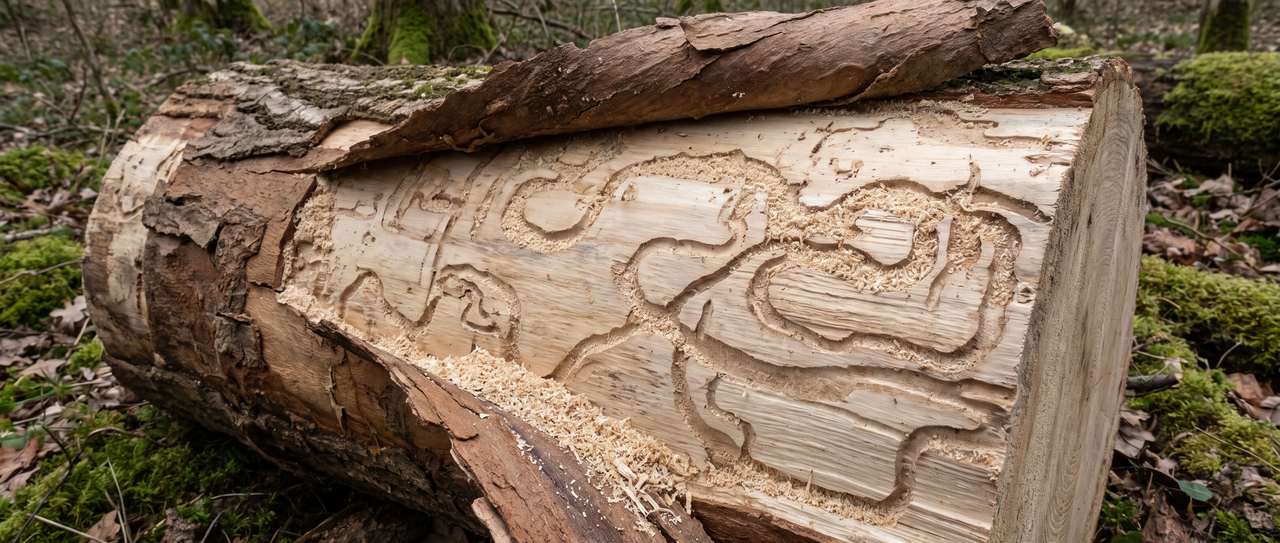
The beetle is in Marion County. This page is not about the insect — it is about the decision you now have to make about the ash tree in your yard.
Call (971) 518-3780If you own a mature ash tree in Salem, you have three options and no fourth one: treat it on a repeating two-year cycle, remove it while it is still alive and the job is straightforward, or wait and pay more later, because a dead ash tree costs materially more to take down than a living one. Emerald ash borer was confirmed at a private home in Silverton — fifteen miles away, in Marion County — in June 2026. The City of Salem's own guidance is that the beetle will kill most ash trees in Oregon and there is no way to stop it. Call (971) 518-3780 for a free assessment of your specific tree.
Send a photo of the bark and the canopy, or just describe what you are seeing. You will get an honest read on whether this is emerald ash borer, whether the ash tree is worth treating, and what removal would run. Call (971) 518-3780.
The timeline matters, because it tells you roughly where in the wave your ash tree sits:
Emerald ash borer spreads slowly on its own and quickly on a trailer. Infested firewood is the classic long-distance vector, which is the entire reason for the quarantine described below. What the timeline means practically: Salem is early enough that most ash trees here are still healthy, and late enough that "we will deal with it later" has stopped being a strategy.
Nobody spots the beetle. It is a narrow metallic-green insect about half an inch long that lives high in the canopy. What you spot is the damage:
Peeling a patch of loose bark on a dying limb settles it: emerald ash borer galleries are winding, S-shaped, and packed with fine sawdust, quite unlike the straight tunnels of other borers. If you want the find on the official record, call the Oregon Department of Agriculture's invasive species hotline at 1-866-INVADER.
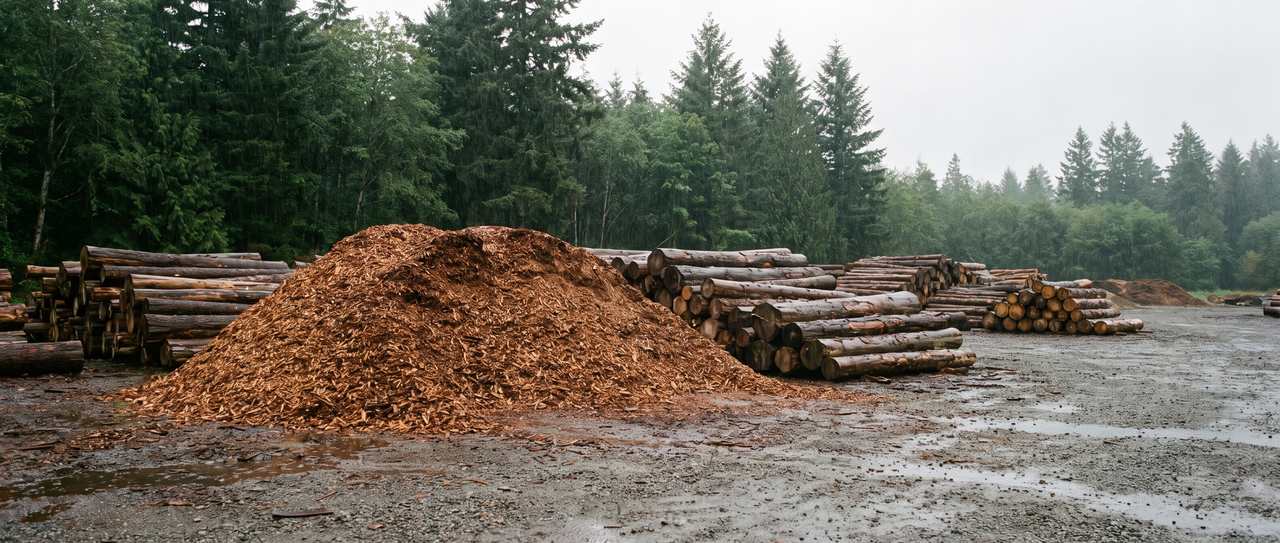
Oregon has established a permanent quarantine covering Washington, Yamhill, Marion, Clackamas and Multnomah counties. It restricts moving ash, white fringetree and olive material out of the quarantine zone — logs, branches, chips and, above all, firewood.
Salem sits on the line. The bulk of the city, including downtown and everything east of the river, is in Marion County and inside the zone. West Salem is in Polk County, which is outside it. That is an unusual situation and worth being careful about rather than casual: the practical advice is to ask your contractor where the ash wood and chips are going before work begins, and to confirm the current rules with the Oregon Department of Agriculture, which maintains them and can update them. Reputable local outfits already handle this — it is a normal part of ash work here now — but it belongs in the conversation before the first cut, not after.
Treat it. Trunk injection with emamectin benzoate, roughly $7 to $16 per inch of trunk diameter every two years, applied mid-May to early June. Right for a healthy, valuable, mature ash tree with less than about 30 to 50 percent canopy decline. It is a subscription, not a cure — details on the ash tree treatment page.
Remove it now, while it is alive. Straightforward work, conventional rigging, predictable price. Most Salem homeowners with a mid-size yard ash land here, because the ash tree is not worth a permanent injection budget. See what removal costs.
Wait. The option most people choose by default, and the only one that gets more expensive on its own. Dead ash goes brittle, climbers will not work in it, and the job moves to a bucket truck or a crane. See dead ash tree removal.
A free assessment gives you the diameter, the canopy condition, and both numbers — what treatment would cost per year and what removal would cost once.
(971) 518-3780Thinning that starts at the top of the canopy, D-shaped exit holes about an eighth of an inch across in the bark, pale flecking where woodpeckers have chipped at the bark to reach larvae, and leafy sprouts breaking out of the trunk and root flare. An ash tree usually shows visible decline only after the larvae have been feeding for a season or two, so early symptoms are subtle by design.
The nearest confirmed detection is Silverton, in Marion County, at a private home in June 2026 — about fifteen miles from Salem. Emerald ash borer was first found on the West Coast in Forest Grove in June 2022 and reached Portland in 2025. Marion County sits inside Oregon's permanent quarantine zone. We do not publish infestation counts for Salem itself; the Oregon Department of Agriculture maintains the official detection record.
The Oregon Department of Agriculture's invasive species hotline, 1-866-INVADER. Reporting is free and it is genuinely useful — the detection map is how the state tracks the front. Reporting is a separate thing from deciding what happens to your ash tree, which is what we help with.
Yes — adults are a narrow metallic green beetle roughly half an inch long, and they are genuinely hard to spot on a mature ash tree because they spend most of their time high in the canopy. The damage under the bark is far easier to find than the insect itself, which is why the D-shaped exit holes and the serpentine galleries are the diagnostic signs rather than sightings.
It declines and dies. Larvae feed in the layer just under the bark, carving winding galleries that progressively cut the tree's water and nutrient transport. Canopy loss climbs season over season until the ash tree is dead. The City of Salem's position is that emerald ash borer will kill most ash trees in Oregon and there is no way to stop the pest.